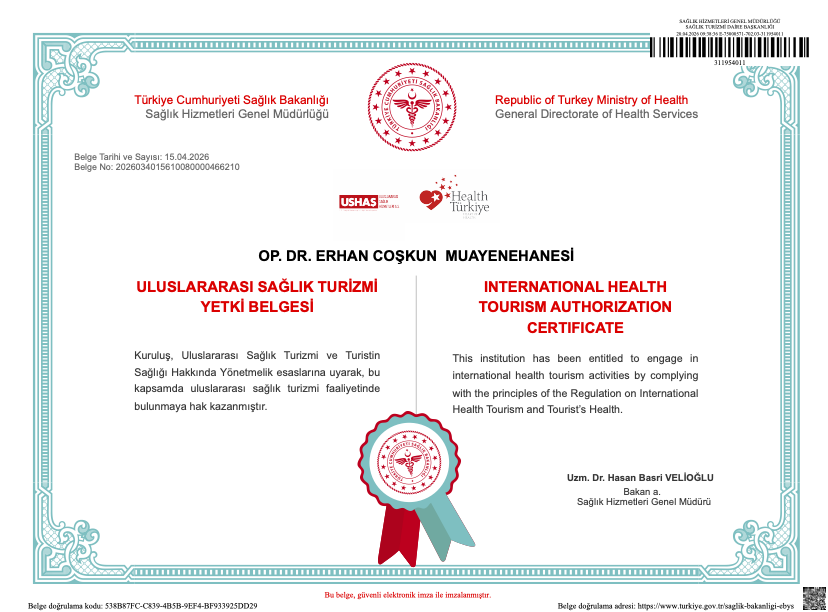
Dr. Erhan Coşkun is a board-certified plastic surgeon who focuses exclusively on rhinoplasty. His approach is built on careful analysis, precise planning, and respect for natural facial balance.
Rather than creating standardized results, he designs each procedure individually—aiming for noses that look natural, function well, and remain harmonious with the face over time.
With international training and extensive surgical experience, Dr. Coşkun prioritizes subtle, lasting outcomes that do not appear surgically altered. Learn more about Dr. Erhan Coşkun →
Learn more about Dr. Erhan Coşkun →
Areas of
Expertıse
Primary Rhinoplasty
A personalized approach to first-time rhinoplasty, focused on facial balance, natural proportions, and long-term harmony.
Learn more →
Revision Rhinoplasty
A personalized approach to first-time rhinoplasty, focused on facial balance, natural proportions, and long-term harmony.
Learn more →
Functional Rhinoplasty
Procedures designed to improve nasal breathing while
preserving—or enhancing—the natural appearance of the nose.
Learn more →
>> Other
Procedurs
Desıgned around balance & harmony
Every nose requires a thoughtful plan
A philosophy of
subtle change
01 — Analysis
Facial proportions, skin structure, and nasal function are carefully evaluated to understand what will work best for your face.
02 — Planning
Each procedure is planned individually, based on precise measurements rather than standardized techniques.
03 — Natural Outcome
The goal is a balanced, natural-looking result that blends seamlessly with your facial features and does not appear surgically altered.
No. Rhinoplasty can improve both the appearance and the function of the nose. Many patients choose rhinoplasty not only for aesthetic refinement but also to address breathing difficulties, structural problems, or issues caused by trauma.
Most patients can return to social activities within 7–10 days after surgery. Swelling gradually decreases over the following weeks, while the final refined result continues to settle over several months.
The goal of modern rhinoplasty is to create a natural-looking result that harmonizes with your facial features. Every procedure is planned individually to preserve facial balance and avoid an overdone appearance.
Patients usually experience mild discomfort rather than severe pain. Temporary swelling, congestion, and sensitivity are normal during the first few days and are generally well controlled with medication.
Rhinoplasty is typically recommended after facial growth is complete. This is usually around age 17–18, although the appropriate timing may vary depending on the individual.
In closed rhinoplasty techniques, incisions are placed inside the nose and leave no visible external scars. In open rhinoplasty, a very small incision is made between the nostrils and usually heals almost invisibly over time.
Yes. Functional rhinoplasty can help correct structural issues such as a deviated septum, nasal valve collapse, or airway obstruction, improving nasal breathing while maintaining aesthetic balance.
Good candidates are generally healthy individuals who have realistic expectations and wish to improve the appearance or function of their nose. A detailed consultation is essential to evaluate facial anatomy, goals, and suitability for surgery.
During your consultation, your facial structure, nasal anatomy, breathing function, and aesthetic expectations are carefully evaluated. The goal is to understand both functional and cosmetic concerns before creating a personalized treatment plan.
You may be a suitable candidate if you are unhappy with the shape of your nose, experience breathing difficulties, or wish to improve facial harmony. A detailed examination helps determine the most appropriate approach for your needs.
Yes. Functional rhinoplasty can address structural issues such as a deviated septum, nasal valve collapse, or other conditions affecting airflow while also improving the appearance of the nose.
The main objective is to achieve a balanced and natural-looking result that complements your facial features. The nose should look refined without appearing overly altered or artificial.
Absolutely. Every nose and facial structure is unique. Surgical planning is based on detailed analysis, precise measurements, and the patient’s personal goals rather than a standard template.
Most patients return to social activities within 7–10 days after surgery. Swelling gradually decreases over several months, while final results continue to refine over time.
In many cases, digital imaging and consultation-based visual planning can help patients better understand potential outcomes and communicate their expectations more clearly.
Before surgery, patients may be advised to stop smoking, avoid certain medications, complete required medical tests, and carefully follow all pre-operative instructions provided during the consultation process.
Initial swelling usually improves within the first few weeks, but subtle swelling may continue to decrease over several months. The final shape of the nose becomes more refined gradually over time.
Most patients feel comfortable returning to work or daily social life within 7–10 days, depending on the extent of the procedure and individual healing speed.
Yes. Mild bruising and swelling around the eyes and nose are common during the first week after surgery. These effects typically fade naturally within days.
Light walking is usually encouraged early in recovery, but intense exercise, heavy lifting, and contact sports should be avoided for several weeks as advised by your surgeon.
Wearing glasses directly on the nose may need to be limited temporarily during the healing process. Your surgeon may recommend alternative support methods if necessary.
Patients are generally advised to sleep with their head elevated and avoid sleeping on their side or stomach during the early recovery period to minimize swelling and protect the nose.
Although noticeable improvements appear after the splint is removed, the final result develops gradually as swelling resolves. Full refinement may take up to one year.
Smoking, excessive sun exposure, heavy physical activity, and any impact to the nose should be avoided during recovery. Following post-operative instructions carefully helps support optimal healing and long-term results.
Ask Us
Ask us any questions you may have. We'll be happy to answer them.
Patıent
Feedback
I am slide content. Click edit button to change this text. Lorem ipsum dolor sit amet, consectetur adipiscing elit. Ut elit tellus, luctus nec ullamcorper mattis, pulvinar dapibus leo.
I am slide content. Click edit button to change this text. Lorem ipsum dolor sit amet, consectetur adipiscing elit. Ut elit tellus, luctus nec ullamcorper mattis, pulvinar dapibus leo.
I am slide content. Click edit button to change this text. Lorem ipsum dolor sit amet, consectetur adipiscing elit. Ut elit tellus, luctus nec ullamcorper mattis, pulvinar dapibus leo.
Meetıngs
Conferences
Dr. Erhan Coşkun regularly participates in national and international scientific meetings, both as an attendee and as an invited speaker. His involvement in these congresses reflects a commitment to continuous learning, knowledge sharing, and staying current with advanced rhinoplasty techniques.
Selected meetings and courses include:
International Rhinoplasty Congresses
Advanced Rhinoplasty and Preservation Courses
Live Surgery Demonstrations
Microsurgery Course — University Hospital Zurich, Switzerand
National and international plastic surgery meetings